Prostate Cancer Screening with NYP/WCM, New York Mets and Fans for the Cure

Join Weill Cornell Medicine doctors at Citi Field for prostate-specific antigen (PSA) testing for prostate cancer, in partership with NewYork-Presbyterian, New York Mets and Fans for a Cure.
PSA testing is recommended for men aged 45 to 75 who have never been diagnosed with prostate cancer and are at average risk. Earlier screening starting at age 40 is recommended for those at higher risk, including Black or African-American men, those with a strong family history of prostate cancer, or those with known genetic mutations linked to prostate cancer.
Note: Game tickets are required for ballpark entry
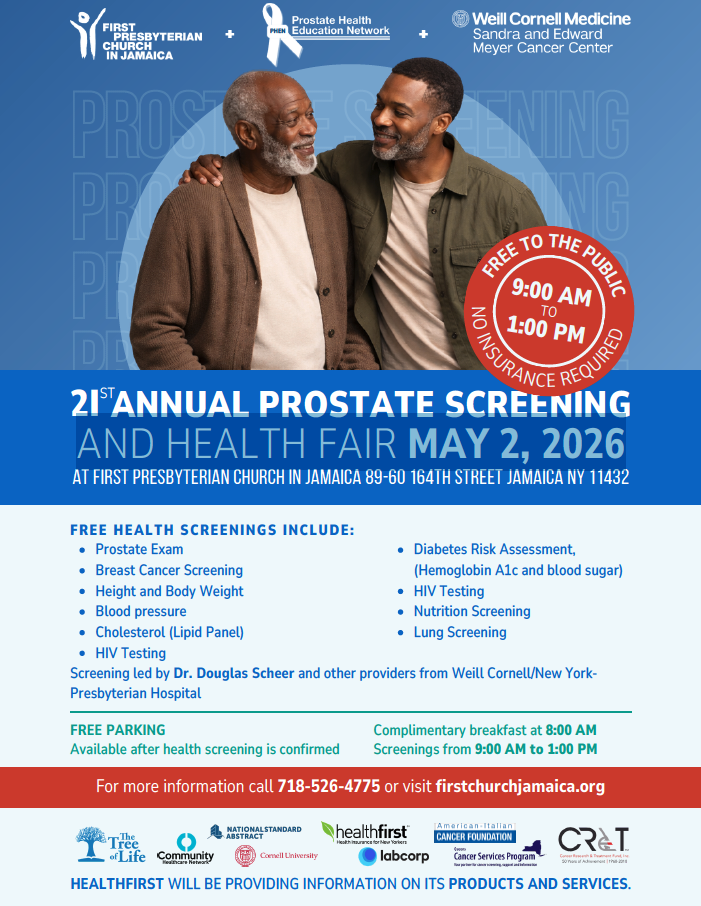
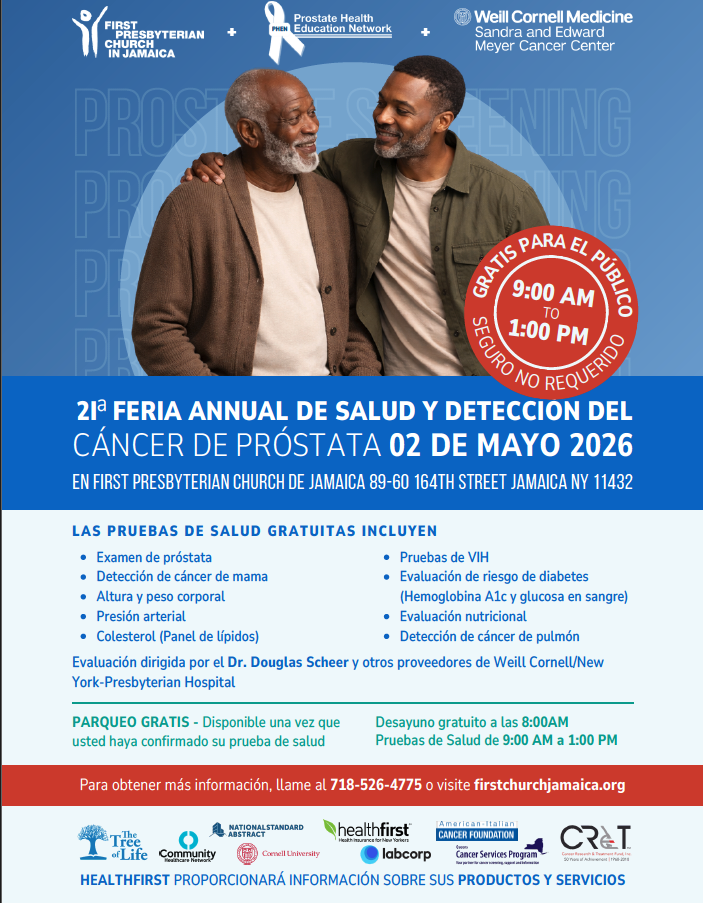
21st Annual Prostate Cancer Screening and Health Fair

The 21st Annual Prostate Screening and Health Fair at First Presbyterian Church in Jamaica will be held on May 2nd from 9:00 AM to 1:00 PM.
Free Prostate Cancer Screening (Blood Test & Family History)
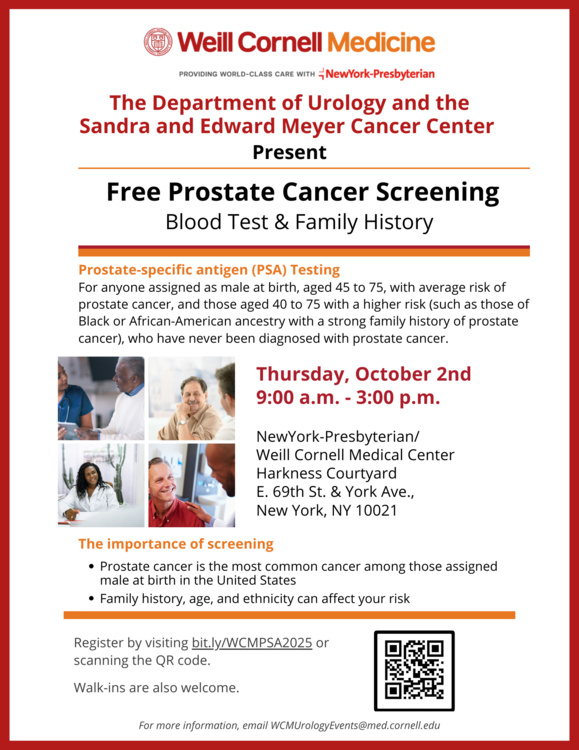
Prostate-specific antigen (PSA) Testing
For anyone assigned as male at birth, aged 45 to 75, with average risk of prostate cancer, and those aged 40 to 75 with a higher risk (such as those of Black or African-American ancestry with a strong family history of prostate cancer), who have never been diagnosed with prostate cancer.
The importance of screening:
- Prostate cancer is the most common cancer among those assigned male at birth in the United States
- Family history, age, and ethnicity can affect your risk
Free Prostate Cancer Screening Blood Test & Family History
Prostate-specific antigen (PSA) Testing
For anyone assigned male at birth aged 40-75 who has never
been diagnosed with prostate cancer. Screening will include a
PSA blood test and brief review of family history.
Male Infertility: Understanding Diagnosis and Treatment Options

Male infertility affects millions of men worldwide and contributes to nearly half of all infertility cases. Common causes can include low sperm production, poor sperm function, blockages or environmental factors. The diagnosis and treatment of male infertility typically involve medical evaluations, semen analysis and options such as medication, lifestyle changes or surgical procedures.
Join us for a virtual discussion, during Urology Awareness Month, exploring male infertility, including causes, screening and treatment approaches.
Understanding Pelvic Organ Prolapse: What It Is and How It’s Treated

Pelvic organ prolapse (POP) occurs when one or more pelvic organs drop from their position. While POP is not life threatening, it can cause pain and discomfort. Symptoms can generally be improved with pelvic floor exercises and lifestyle changes, but sometimes medical treatment is needed. Join us, with faculty from the Department of Urology, for a virtual discussion, during Urology Awareness Month, exploring POP, including risk factors, symptoms and treatment approaches.
Kidney Stones Explained: Causes, Symptoms and Management

The kidneys are vital organs that help maintain a healthy balance of electrolytes, body fluids and blood pressure. Kidney stones are hard mineral deposits that form within the kidneys and may disrupt this function and cause significant pain and other serious complications. Join us, during National Urology Awareness Month, for a virtual discussion including an overview on kidney stones, its causes, as well as how to treat an acute stone episode, the various surgical managements for uncomplicated and complex stone conditions, the metabolic evaluation, and strategies to prevent them.
20th Annual Prostate Screening & Health Fair-First Presbyterian Church in Jamaica
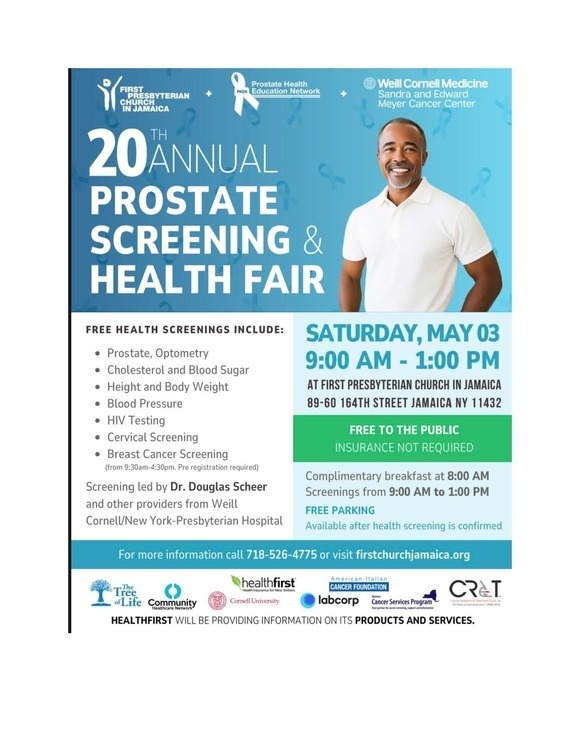
- Cancer prevention workshops (Prostate & Colon)
- Prostate screenings (PSA)
- Colorectal screenigs through FIT Kits (stool based tests)
- Cholesterol, glucose and blood pressure scrennings
- BMI
- Mammograms
What Should You Know About Bladder Cancer?

Featuring:
Director of Urologic Oncology, NewYork-Presbyterian Brooklyn Methodist Hospital
Assistant Professor of Clinical Urology, Weill Cornell Medicine
This webinar will cover:
- What is bladder cancer?
- What are the associated symptoms and causes?
- What treatment options are available?
Confronting Cancer with Clarity & Courage

- General cancer prevention education and early detection information
- Colorectal cancer screenings through FIT Kits distribution
- Prostate cancer screening navigation
- Lung cancer risk assessments